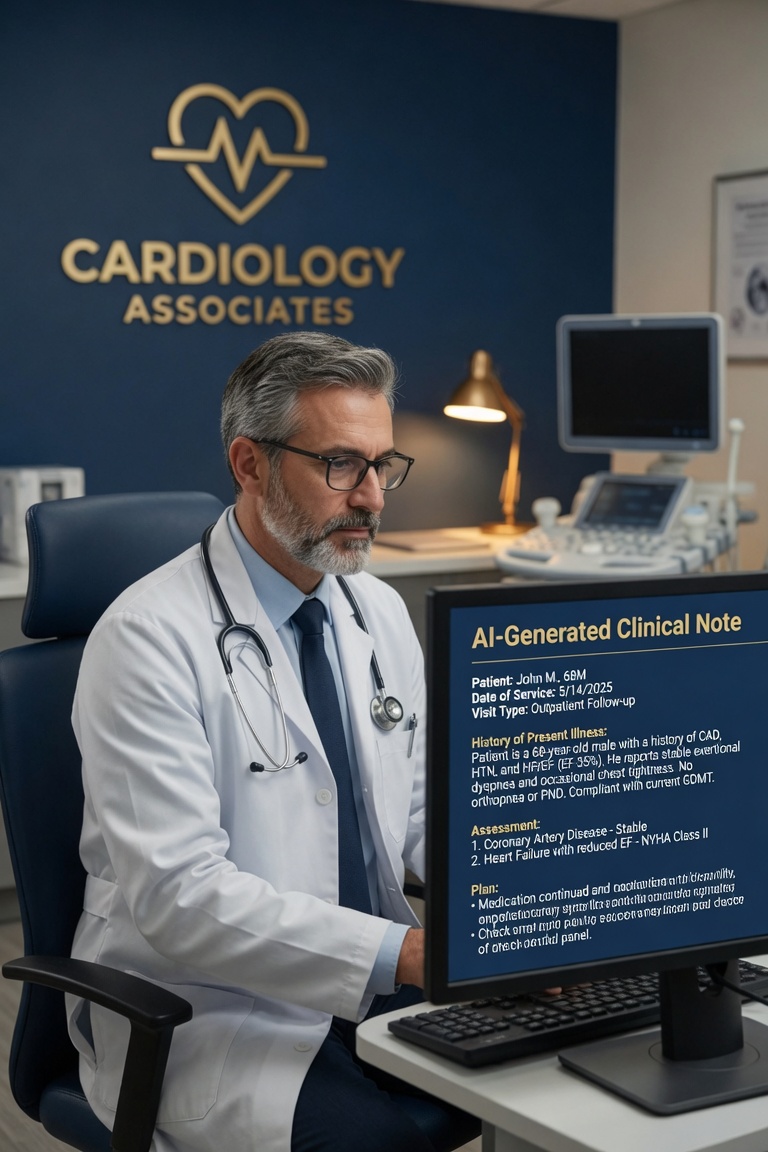
Specialty practices face unique documentation challenges. Whether it’s cardiology, orthopedics, oncology, or gastroenterology, specialists often deal with complex procedures, detailed clinical findings, and the need for precise medical terminology.
Traditional scribing solutions were built primarily for primary care. Ambient AI scribing is finally catching up — and in many cases, outperforming general solutions when properly configured for specialty workflows.
Why Specialty Practices Need Tailored AI Scribing
- Complex Terminology: Specialty-specific language, procedures, and medications require higher accuracy than general medical scribing.
- Procedure Documentation: Many specialties perform in-office procedures that need detailed, structured notes for billing and compliance.
- Multi-System Involvement: Patients in specialties like cardiology or oncology often have multiple comorbidities that must be accurately captured.
- High-Stakes Accuracy: Errors in specialty documentation can have significant clinical and financial consequences.
Benefits Specialty Practices Are Seeing
Practices that have adopted ambient AI scribing tailored for their specialty are reporting:
- Significant reduction in after-hours documentation time
- Higher quality, more complete clinical notes
- Better capture of billable procedures and services
- Improved physician satisfaction and reduced burnout
The key is choosing an AI scribing solution that can be trained or configured for your specific specialty workflows rather than using a generic one-size-fits-all tool.